
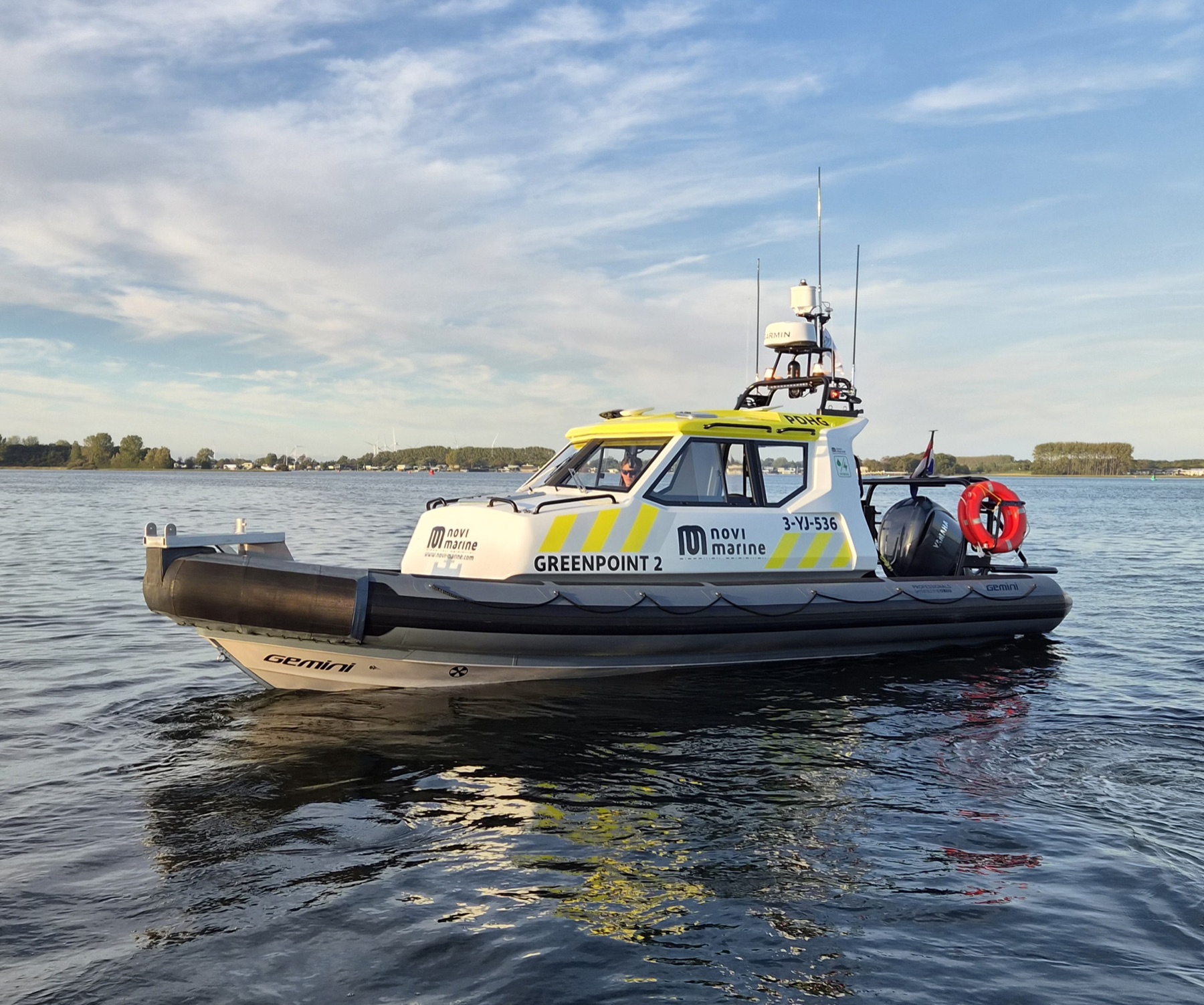
Type D guard vessel
Type D guard vessel for offshore and nearshore operations.
Patrol, traffic support and rapid response from a vessel configured around the operating area, watch duration and project specification.
Operational role
What is a Type D guard vessel?
A Type D guard vessel supports projects in offshore, nearshore and high-traffic waters. It patrols work and exclusion zones, warns approaching traffic, reports developing situations and provides a fast response when the operation requires it.
The final tasking, crewing and equipment package always follow the project specification and risk assessment. In this context, Type D describes the operational guard vessel role; it is not the same as CE design category D.
Configured for the task
The right vessel for the operational role.
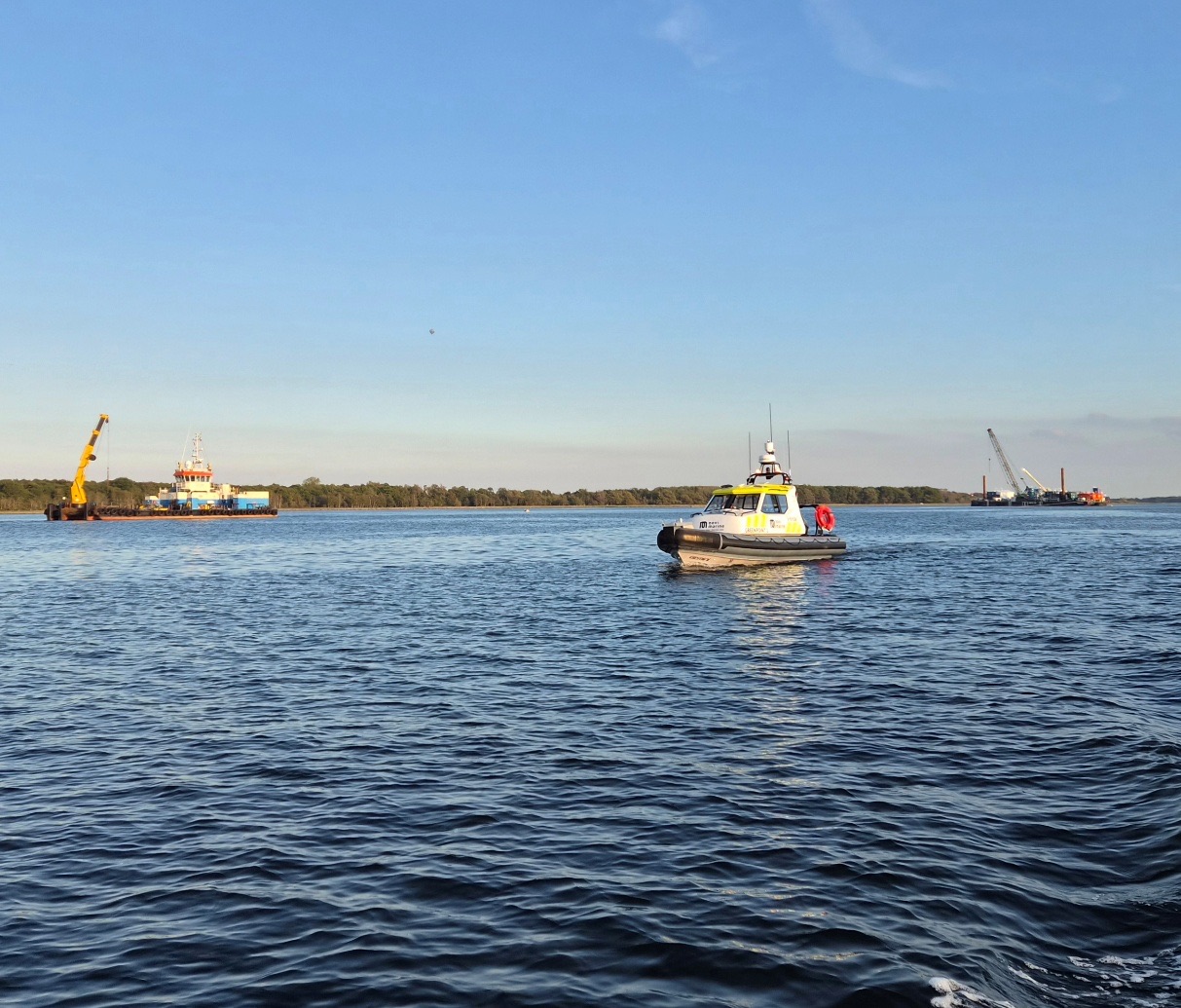
Guard vessel assignments do not all require the same configuration. Operating area, weather, watch duration, crew, speed and equipment determine the most suitable platform. A Cabin RIB is a strong option when sheltered working conditions and rapid response are both required.
Operational scope
Guard support around the worksite
The deployment is built around the project scope, navigation area, risk profile, traffic density and required response plan.
Exclusion zones
Patrol and warn
Monitor the boundary, identify approaching traffic early and maintain contact with relevant parties.
Vessel traffic
Traffic support
Guide commercial and leisure traffic around cable works, surveys, inspections and other offshore and nearshore activities.
Standby
Safety and observation
Hold station, report developments and remain available to assist throughout the agreed operational window.
Rapid response
Fast on scene
Respond immediately to unplanned movements, changing conditions or a request from the project organisation.
Selection and mobilisation
Prepared around your project specification
Selecting the right guard vessel starts with the worksite, expected traffic and operating profile. We align the vessel, crew, communications, reporting and mobilisation with the requirements set by your project.
Project information
- ✓Location, schedule and operating window
- ✓Worksite and exclusion-zone boundaries
- ✓Traffic profile and response scenarios
- ✓Crew and watch duration
Before mobilisation
- ✓Project-specific equipment
- ✓Communication and reporting protocols
- ✓Charging and fuel logistics
- ✓Documentation and readiness checks
Featured project
11 hours of electric vessel traffic support
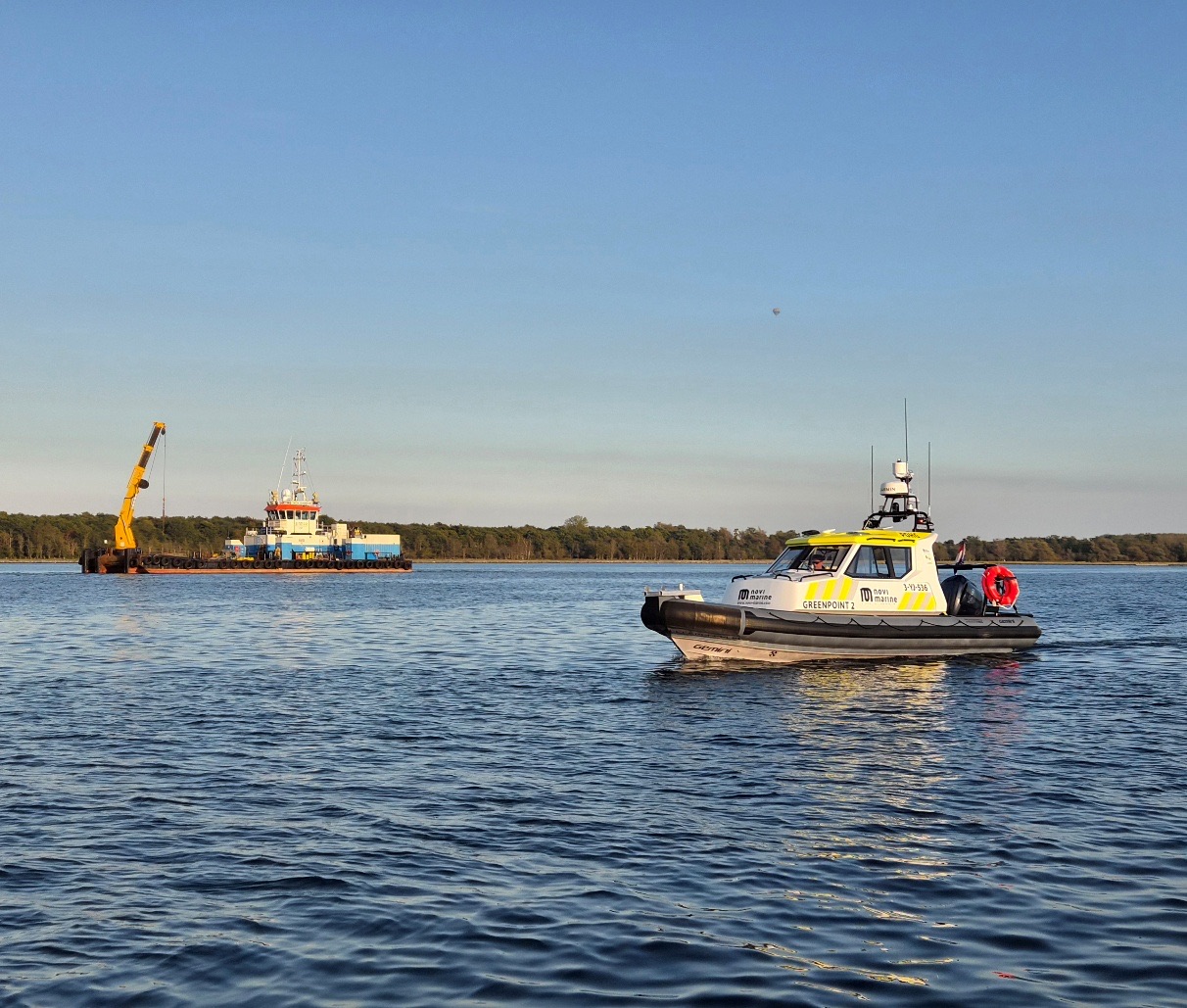
Greenpoint 2 completed a full operational day supporting vessel traffic on the Veerse Meer. The Hybrid Cabin RIB ran fully electric for 11 hours and returned with 38% battery capacity remaining.
The deployment shows that a sheltered guard vessel can operate quietly and without local exhaust emissions for extended periods. Conventional propulsion remains immediately available for longer transits or a rapid response.
Need a guard vessel for your project?
Share the operating area, project window and required tasks. We will assess the deployment and return with a suitable configuration and availability.
Frequently asked questions
Type D guard vessel FAQs
Is Type D the same as CE design category D?
No. On this page, Type D describes the operational guard vessel role within a project. CE design category D is a separate classification. Vessel requirements are set by the project specification, navigation area and risk assessment.
When is a Cabin RIB suitable as a guard vessel?
A Cabin RIB is a suitable option when speed and manoeuvrability need to be combined with a sheltered working environment. That is particularly valuable during long watches, changing weather and operations where observation, communication and rapid response must work together.
Can Greenpoint 2 operate fully electric?
Yes, for suitable operating profiles Greenpoint 2 can run fully electric. During one vessel-traffic support operation, it completed an 11-hour electric day and returned with 38% battery capacity. Endurance depends on speed, load, conditions and duty cycle.
What information is required for an enquiry?
Please provide the project location, schedule, intended tasks, watch duration, crew requirements, communication protocols and any project-specific documentation. This allows us to assess suitability, configuration and mobilisation.