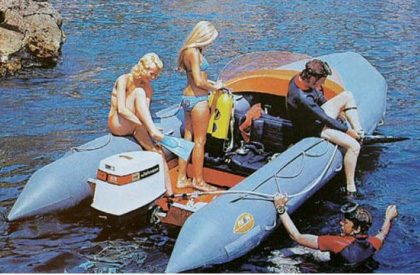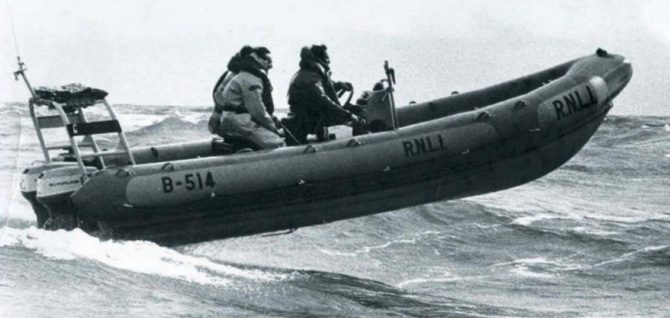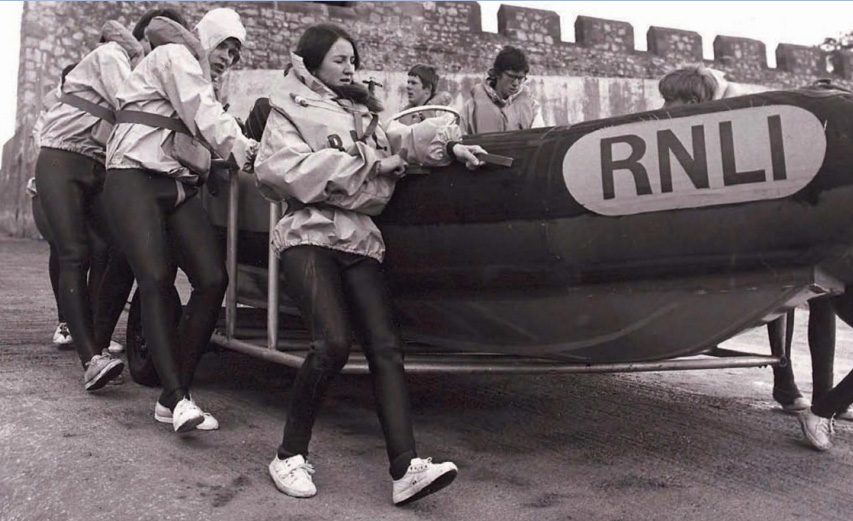
RIBs now serve rescue organisations, police, navies, customs services, commercial operators and leisure users. The rigid inflatable boat grew out of the fully inflatable craft and developed rapidly from the 1960s into a distinct, highly seaworthy type.
Atlantic College and the RNLI
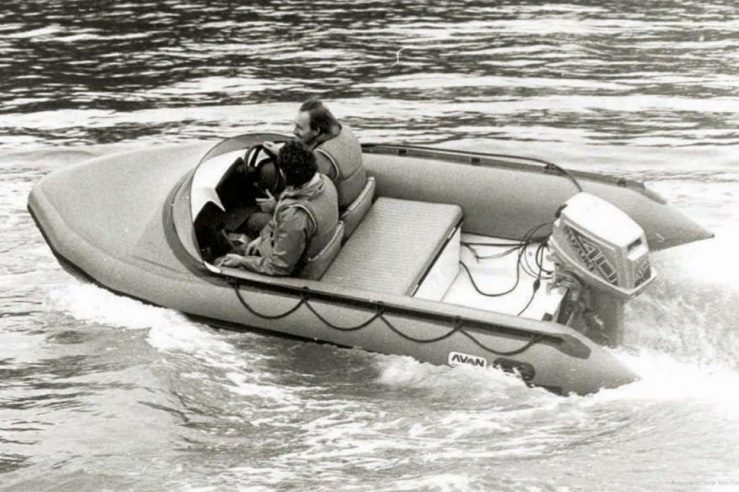
A pivotal phase took place at Atlantic College in Wales, which also hosted a Royal National Lifeboat Institution unit. Students and designers began placing rigid floors beneath existing inflatables, progressing from flat plywood to a V-shaped glass-reinforced plastic hull.
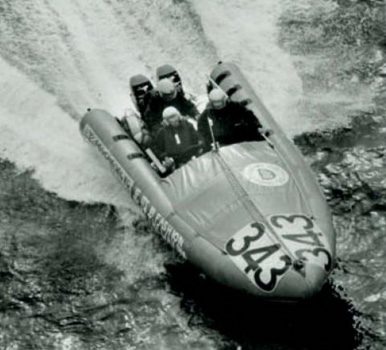
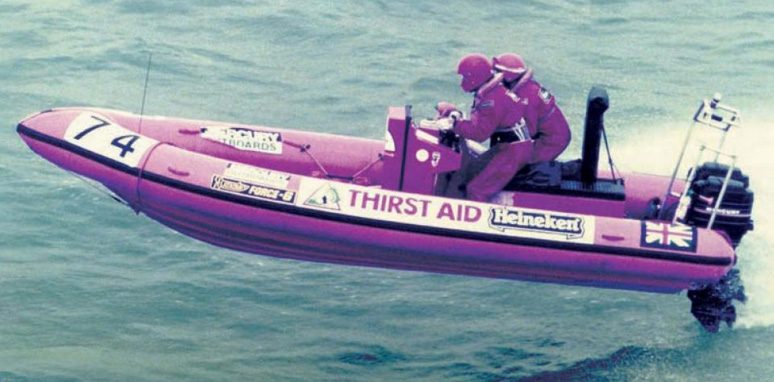
The 15-foot X-1, X-2 and X-3 prototypes led to the Atlantic 21. An early example named Psychedelic Surfer entered the 1969 Round Britain Powerboat Race, and the RNLI adopted the resulting concept extensively from 1972.
Development beyond Britain
The technology soon spread to North America and South Africa. The Canadian Coast Guard adopted a 21-foot version, while the demanding waters around Cape Town encouraged a strong regional RIB industry led by builders including Gemini and Falcon.
Tube technology evolved alongside the hull. Synthetic fabrics such as Hypalon/CSM improved airtightness, longevity, weather resistance and colour choice, making the RIB attractive to a far wider range of professional and leisure operators.
A concept that endures
The combination of a rigid V-hull, substantial reserve buoyancy and relatively low weight explains why the core concept remains relevant. Today’s RIBs are more sophisticated, but they still build on principles proven through practical rescue work at Atlantic College.
Explore today’s Gemini Marine RIB models.
Project images