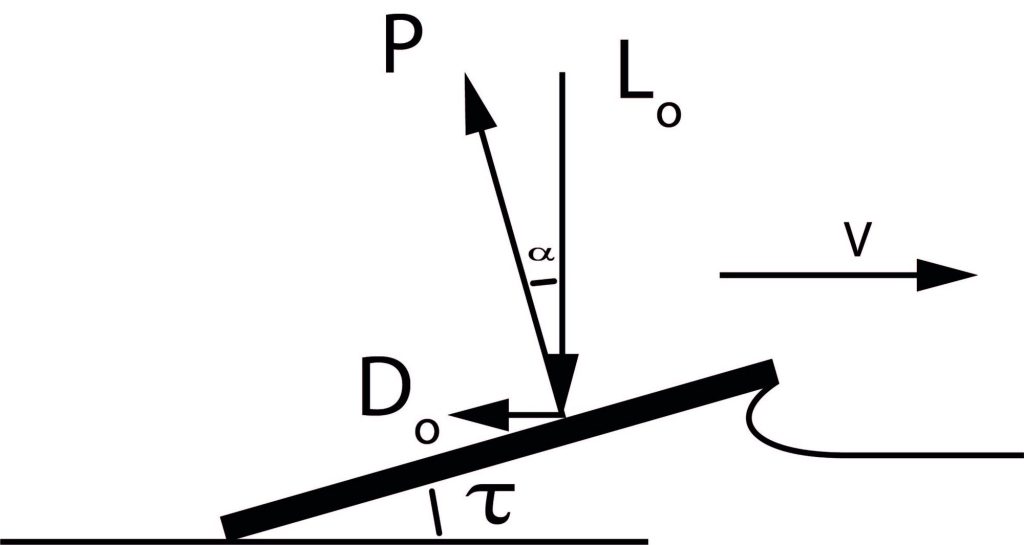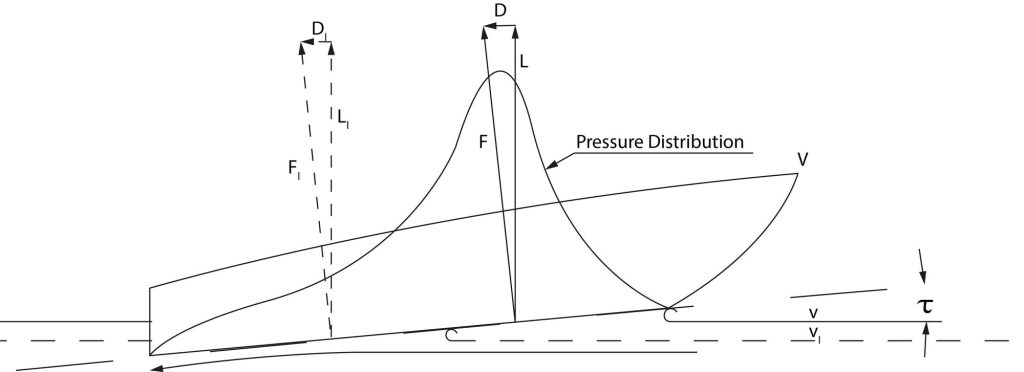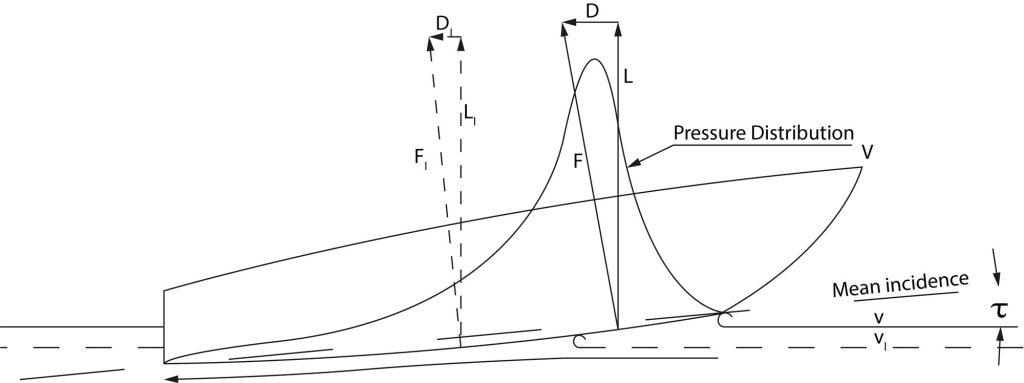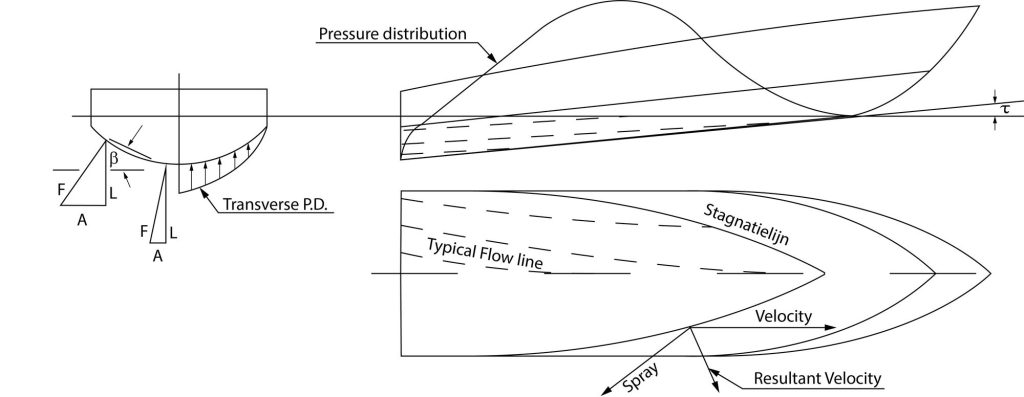
At sufficient speed, a planing craft is supported increasingly by hydrodynamic lift rather than displacement alone. The hull rises, wetted surface reduces and drag can fall significantly. Weight, bottom geometry and a clean release at the transom all determine how readily a boat reaches the plane.
Longitudinal hull shape
The bottom profile from bow to stern influences trim, resistance and useful speed range. A hook produces comparatively strong lift aft and can plane early, but may force the bow down at higher speeds. A straight run offers consistent pressure distribution across a broad operating range. A rocker shifts the centre of pressure forward and can suit very fast craft, although it must be balanced carefully to avoid suction and porpoising.
Transverse hull shape
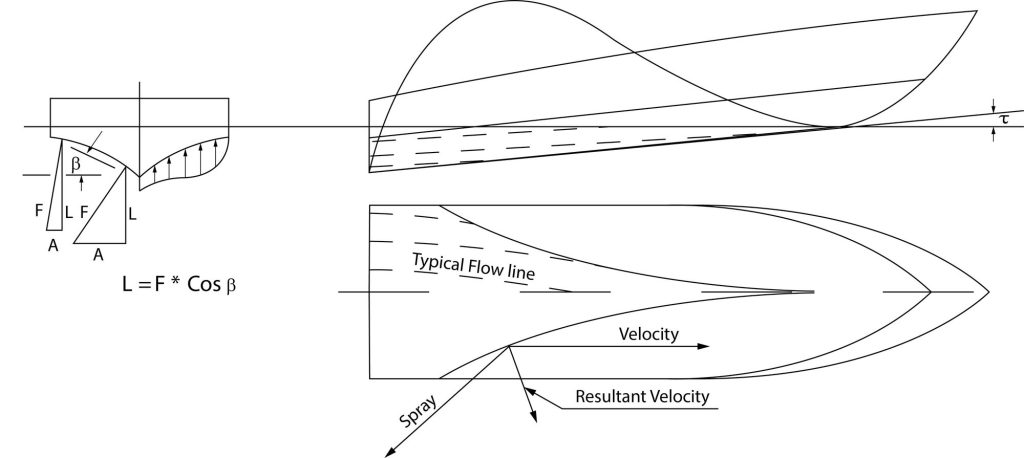
Section shape matters just as much. Straight sections distribute pressure evenly. A concave form can track well but may lose its most effective lifting area quickly as the boat rises. With a convex section, the efficient central area remains immersed longer, often giving more consistent behaviour across speed and better composure in waves.
Deadrise
Deadrise is the angle of the V-bottom relative to horizontal. A higher angle generally softens impacts in a seaway, but also requires more power to achieve a given speed. The correct choice depends on length, displacement, operating speed and sea conditions.
What spray rails do
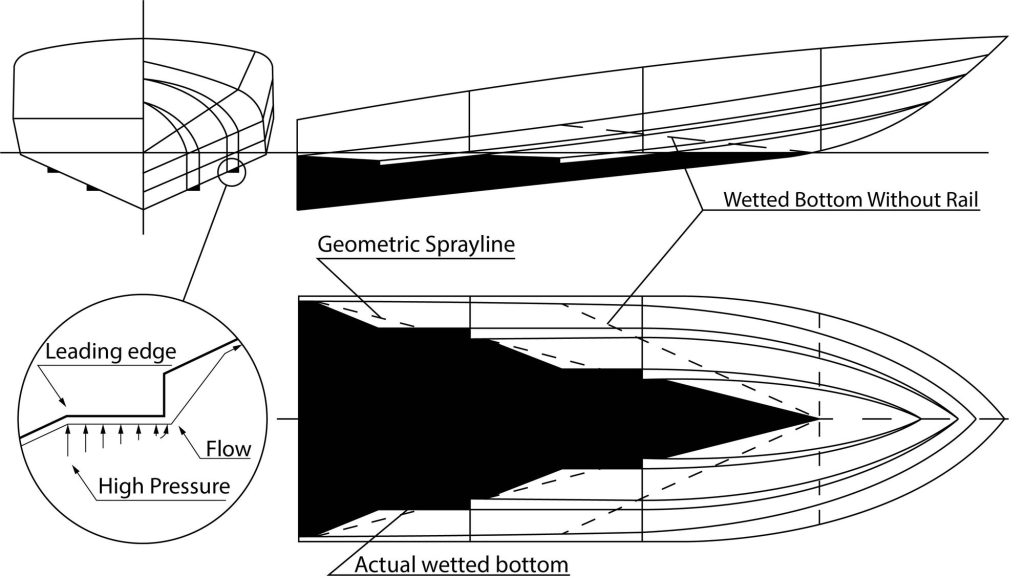
Spray rails interrupt the flow along the hull, direct water outward and create additional lift. A well-designed arrangement can reduce wetted area and spray while damping pitch and yaw. Their position and geometry only make sense as part of the complete hull design.
See how these principles are applied across the Gemini Marine RIB range.
Project images